
When it comes to purchasing auto insurance, it’s easy to feel overwhelmed by all the options available. Among the most common types are third-party and comprehensive auto insurance, but what exactly do these terms mean, and how do they differ?
In this comprehensive guide, we’ll dive deep into the differences between third-party vs comprehensive auto insurance, helping you make an informed decision about which policy suits your needs. Whether you’re a first-time car owner or just reevaluating your insurance policy, this article will help you navigate the world of vehicle insurance and decide which coverage type offers the protection you need.
What Is the Difference Between Third-Party and Comprehensive Car Insurance?
Understanding the basic definitions of these two types of car insurance policies is crucial. Both third-party and comprehensive insurance provide different levels of coverage and protection, and your choice will depend on factors such as your budget, the value of your vehicle, and how much protection you need.
Third-Party Auto Insurance Explained
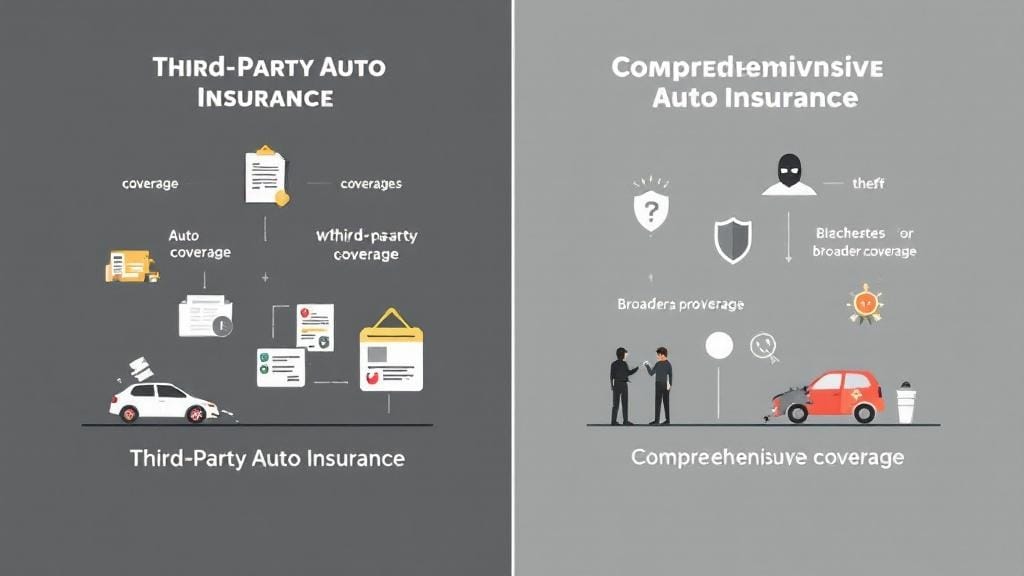
Third-party auto insurance is the minimum level of coverage required by law in many countries. It is designed to protect other parties (third parties) involved in an accident that is deemed your fault. This type of insurance covers the damage to other vehicles, property, and even medical expenses for the people involved in the accident, but it doesn’t cover any damage to your own car.
Coverage Under Third-Party Insurance:
-
Damage to Third-Party Property: If you cause damage to someone else’s property, such as their vehicle or a building, third-party insurance covers the cost of repairs or replacements.
-
Injury to Other Drivers or Passengers: If you are responsible for an accident that injures others, your third-party policy covers their medical expenses and any compensation for pain and suffering.
-
Legal Costs: If the other party decides to take legal action, third-party insurance can help cover your legal fees.
However, it’s important to note that third-party insurance won’t cover damage to your own vehicle or any injuries you may sustain. This is why many people choose comprehensive car insurance for additional peace of mind.
Comprehensive Auto Insurance Explained
On the other hand, comprehensive car insurance offers a much broader range of coverage. It’s designed to protect you and your vehicle against almost all types of risks, including accidents, theft, vandalism, fire, and natural disasters like floods or hail.
While third-party insurance only covers damages to others, comprehensive insurance also covers the damage to your own vehicle, no matter who is at fault.
Coverage Under Comprehensive Insurance:
-
Damage to Your Vehicle: If you collide with another car or object, your comprehensive insurance will cover the repair costs to your own vehicle, regardless of fault.
-
Theft and Vandalism: If your car is stolen or damaged due to vandalism, comprehensive insurance will cover the cost of repairs or replacement.
-
Natural Disasters: Whether it’s a hailstorm, flood, or fire, comprehensive car insurance will provide coverage for any damage your vehicle sustains due to natural disasters.
-
Personal Injury: While some comprehensive policies include personal injury protection (PIP), it varies by provider and region, so always check the specifics of your policy.
Key Differences Between Third-Party and Comprehensive Auto Insurance
To make it easier to understand, let’s break down the key differences between third-party and comprehensive auto insurance in a simple comparison table:
| Feature | Third-Party Auto Insurance | Comprehensive Auto Insurance |
|---|---|---|
| Coverage for Your Vehicle | No | Yes |
| Coverage for Third-Party | Yes (damage to other vehicles and property) | Yes (includes third-party coverage) |
| Protection Against Theft | No | Yes |
| Protection Against Vandalism | No | Yes |
| Natural Disaster Coverage | No | Yes |
| Cost | Typically cheaper than comprehensive coverage | Generally more expensive than third-party insurance |
As you can see, comprehensive insurance provides much broader protection than third-party insurance. While it comes at a higher price point, the additional coverage could save you from significant financial strain if something happens to your car.
Pros and Cons of Third-Party vs Comprehensive Auto Insurance
Now that we’ve covered the basics, let’s look at the pros and cons of third-party vs comprehensive auto insurance. This will help you weigh the benefits and drawbacks of each to determine which option is best for you.
Pros of Third-Party Auto Insurance
-
Lower Premiums: Third-party auto insurance is generally more affordable than comprehensive coverage, making it a good choice for drivers on a tight budget.
-
Minimum Legal Requirement: In many regions, third-party auto insurance is the minimum required by law to drive, so if you’re just looking for basic coverage, this option might meet your legal obligations.
-
Simplicity: The policy is straightforward and covers the basics without the added complexity of extensive coverage options.
Cons of Third-Party Auto Insurance
-
Limited Protection: Third-party insurance only covers damage to third parties, meaning you won’t be compensated if your car is damaged or stolen.
-
No Coverage for Your Own Injuries: If you’re injured in an accident, third-party insurance won’t cover medical expenses for you or your passengers.
-
Higher Risk for Your Vehicle: If your car is old or less valuable, third-party insurance may leave you vulnerable to the financial burden of repairs after an accident.
Pros of Comprehensive Auto Insurance
-
All-Round Protection: Comprehensive coverage offers peace of mind by covering a wide range of incidents, including accidents, theft, vandalism, and natural disasters.
-
Protection for Your Vehicle: Your vehicle is covered in almost all situations, whether you’re at fault or not.
-
No Need to Worry About Accidents: Whether it’s a minor fender-bender or a major accident, comprehensive insurance helps cover the costs of repairing your car, even if it’s your fault.
Cons of Comprehensive Auto Insurance
-
Higher Premiums: Comprehensive coverage comes with a higher price tag, so it’s not the best option if you’re on a tight budget.
-
Excess Costs: Some policies come with a high deductible (the amount you pay before insurance kicks in), which can increase your overall out-of-pocket costs.
-
Complexity: With all the additional coverage options, comprehensive policies can be more difficult to navigate and understand.
Which Is Better: Third-Party or Comprehensive Auto Insurance?
You might be wondering: which is better: third-party or comprehensive auto insurance? The answer depends on your individual circumstances, such as your driving habits, the age and value of your car, and your budget.
-
Choose Third-Party Insurance if:
-
You drive an older car that isn’t worth much.
-
You’re looking for basic, affordable coverage that meets legal requirements.
-
You don’t mind taking on more financial risk in case of an accident or theft.
-
-
Choose Comprehensive Insurance if:
-
You own a new or valuable car and want to protect it against all kinds of risks.
-
You want peace of mind and coverage for a wide range of incidents.
-
You can afford the higher premiums.
-
Third-Party vs Comprehensive Insurance Cost Comparison
One of the biggest factors in deciding between third-party vs comprehensive car insurance is cost. On average, comprehensive coverage tends to be 30-50% more expensive than third-party insurance. However, the cost will vary depending on factors like:
-
Your age, driving history, and location
-
The make and model of your vehicle
-
The deductible you choose
-
The insurer you select
To help determine which is the most cost-effective option, it’s a good idea to get quotes from different insurance providers and compare coverage.
FAQs About Third-Party vs Comprehensive Auto Insurance
1. How does comprehensive auto insurance protect you?
Comprehensive auto insurance covers damage to your own car, including incidents such as accidents, theft, vandalism, or natural disasters. It also covers damage to third-party vehicles and property.
2. What’s the difference between third-party and comprehensive insurance?
Third-party insurance only covers damage to others’ property or injuries caused by you, while comprehensive insurance covers both your own vehicle and third-party damage.
3. Which is better, third-party or comprehensive auto insurance?
It depends on your needs. If you want basic coverage and have a low-budget vehicle, third-party might be better. If you want broader protection, especially for a new or expensive car, comprehensive insurance is the better option.
4. What are the pros and cons of third-party auto insurance?
Pros: cheaper premiums and basic legal coverage.
Cons: limited protection, no coverage for your own vehicle, and no protection for personal injury.
5. How much does comprehensive auto insurance cost?
Comprehensive auto insurance is generally more expensive than third-party insurance. The cost depends on factors like your driving history, vehicle value, and location.
6. Can I upgrade from third-party to comprehensive insurance?
Yes, you can easily upgrade your coverage by contacting your insurer and adjusting your policy. Many providers allow you to switch or customize your plan.
7. Does comprehensive insurance cover theft?
Yes, comprehensive insurance covers theft, as well as vandalism and other non-collision incidents.




Comments (0)