
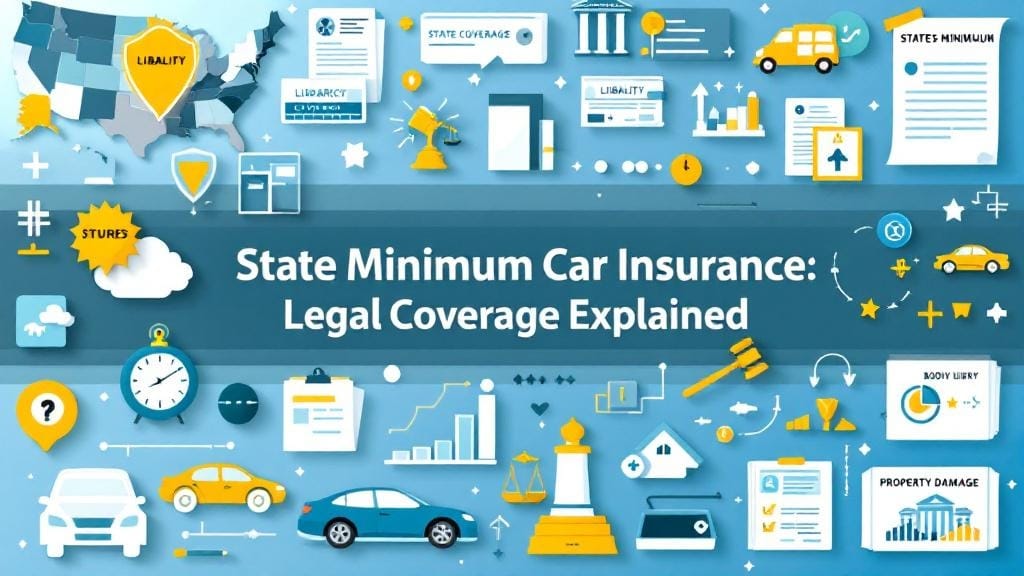
When it comes to driving, having car insurance is not just a good idea—it’s the law. Every state in the U.S. requires drivers to have a certain level of car insurance coverage, and these state minimum car insurance requirements vary. In this blog post, we will break down what state-mandated auto insurance is, what the minimum coverage consists of, and how it affects your car insurance premiums. Whether you’re a new driver or a seasoned one looking for a refresher, understanding your state’s required car insurance will help you stay protected and compliant.
What is State Minimum Car Insurance?
State minimum car insurance refers to the lowest level of car insurance coverage that each state legally requires drivers to carry. The exact minimum requirements depend on where you live, as each state has its own set of regulations for auto insurance. Generally, these requirements focus on providing financial protection in the event of an accident, covering both bodily injury and property damage.
However, while every state mandates minimum car insurance coverage, the specifics of that coverage—like the limits and types of coverage—can differ significantly from one state to another.
Why Do States Have Minimum Car Insurance Requirements?
The main purpose of state minimum car insurance is to ensure that drivers can cover the costs of damages or injuries they may cause in an accident. Without insurance, victims of accidents might struggle to get compensated, which could lead to financial and legal complications. By setting minimum car insurance requirements, states help protect both drivers and their passengers.
Additionally, the requirement for car insurance provides a sense of security for everyone on the road. If you’re involved in an accident and the other driver doesn’t have insurance or enough coverage, your own insurance can help cover the costs.
Types of Coverage in State Minimum Car Insurance
While each state has different minimum car insurance requirements, the basic types of coverage are relatively consistent across the country. The most common types of mandatory coverage include:
1. Bodily Injury Liability (BI)
Bodily injury liability coverage is designed to pay for medical expenses, lost wages, and legal fees if you’re responsible for causing injury to someone else in an accident. This is typically split into two separate limits:
-
Per-person limit: The maximum amount the policy will pay for each individual injured in an accident.
-
Per-accident limit: The total maximum amount the policy will pay for all injured parties in an accident.
2. Property Damage Liability (PD)
Property damage liability covers the cost of repairing or replacing property that you damage in an accident. This includes damage to other vehicles, buildings, fences, or any other property involved. It does not cover damage to your own car.
3. Uninsured/Underinsured Motorist Coverage (UM/UIM)
While not required in every state, uninsured motorist coverage can be crucial. If you’re hit by a driver who doesn’t have insurance or has insufficient coverage, this type of policy will help pay for your medical bills and other expenses. Some states require a minimum amount of uninsured motorist coverage, while others allow you to reject it.
What Does State-Mandated Auto Insurance Cover?
The main purpose of state-mandated auto insurance is to cover third-party damages and injuries caused by the insured driver. Here’s what each of the most common coverage types typically includes:
-
Bodily injury liability: Covers expenses for medical bills, pain and suffering, and loss of income for people injured in an accident that you cause.
-
Property damage liability: Pays for the repair or replacement of another person’s property that you damage in an accident.
-
Uninsured/underinsured motorist coverage: Protects you in case you’re involved in an accident with someone who doesn’t have sufficient or any insurance coverage.
Minimum Car Insurance by State: What’s the Difference?
Each state sets its own requirements for the minimum coverage limits. For example, in one state, the required minimum bodily injury liability might be $25,000 per person and $50,000 per accident. In another state, the minimum could be much lower or higher, depending on local laws.
Here are a few examples of how car insurance minimums differ by state:
1. California
-
Bodily Injury Liability: $15,000 per person, $30,000 per accident
-
Property Damage Liability: $5,000
2. New York
-
Bodily Injury Liability: $25,000 per person, $50,000 per accident
-
Property Damage Liability: $10,000
3. Florida
-
Bodily Injury Liability: Not required (unless the driver has previous violations)
-
Property Damage Liability: $10,000
-
Personal Injury Protection (PIP): $10,000
These are just a few examples, and requirements can vary significantly. It’s essential to check your state’s specific insurance requirements.
What Happens if You Don’t Have the State Minimum Car Insurance?
Driving without the state-required minimum car insurance can result in serious consequences, including fines, license suspension, and even legal action. In some cases, if you are involved in an accident without insurance, you may be held personally responsible for all the damages and medical expenses.
Minimum Coverage vs. Full Coverage: What’s the Difference?
While state minimum car insurance meets the bare legal requirements, it might not offer enough protection if you’re involved in a serious accident. Let’s break down the difference between minimum coverage and full coverage insurance:
Minimum Coverage Insurance
State minimum car insurance generally includes:
-
Liability coverage (for bodily injury and property damage)
-
Uninsured motorist coverage (in some states)
However, it does not cover:
-
Your medical bills (unless you have personal injury protection, which is required in some states)
-
Damage to your own car (unless you add collision or comprehensive coverage)
-
Any non-accident related damage (e.g., theft, vandalism)
Full Coverage Insurance
Full coverage typically includes:
-
Liability coverage (bodily injury and property damage)
-
Collision coverage (pays for repairs to your car after an accident)
-
Comprehensive coverage (covers damage from things like theft, weather, vandalism)
-
Uninsured/underinsured motorist coverage
Full coverage is generally more expensive than minimum coverage because it provides a higher level of protection. But it might be a good choice if you want to avoid paying out-of-pocket for repairs or medical bills after an accident.
FAQs About State Minimum Car Insurance
1. What is the lowest legal car insurance coverage in California?
In California, the lowest legal car insurance coverage includes:
-
Bodily Injury Liability: $15,000 per person, $30,000 per accident
-
Property Damage Liability: $5,000
2. Why is minimum car insurance required by state law?
State-required car insurance ensures that drivers can pay for damages and medical bills if they are at fault in an accident. It helps protect other drivers, pedestrians, and property from financial harm due to accidents caused by uninsured or underinsured drivers.
3. Is full coverage worth the extra cost over state minimum coverage?
Full coverage can be worth it if you want more protection for your vehicle and personal expenses after an accident. It’s particularly useful for new cars or if you want peace of mind in case of non-accident damage (like theft or natural disasters).
4. How much does minimum car insurance cost on average?
The cost of minimum car insurance varies depending on the state, your driving history, and other factors. On average, minimum car insurance can cost anywhere from $300 to $800 per year. However, rates can be higher or lower depending on where you live.
5. What happens if I don’t have proof of insurance?
If you are pulled over and don’t have proof of insurance, you could face fines, your car may be impounded, and your driver’s license might be suspended. Always keep proof of insurance in your vehicle.





Comments (0)