
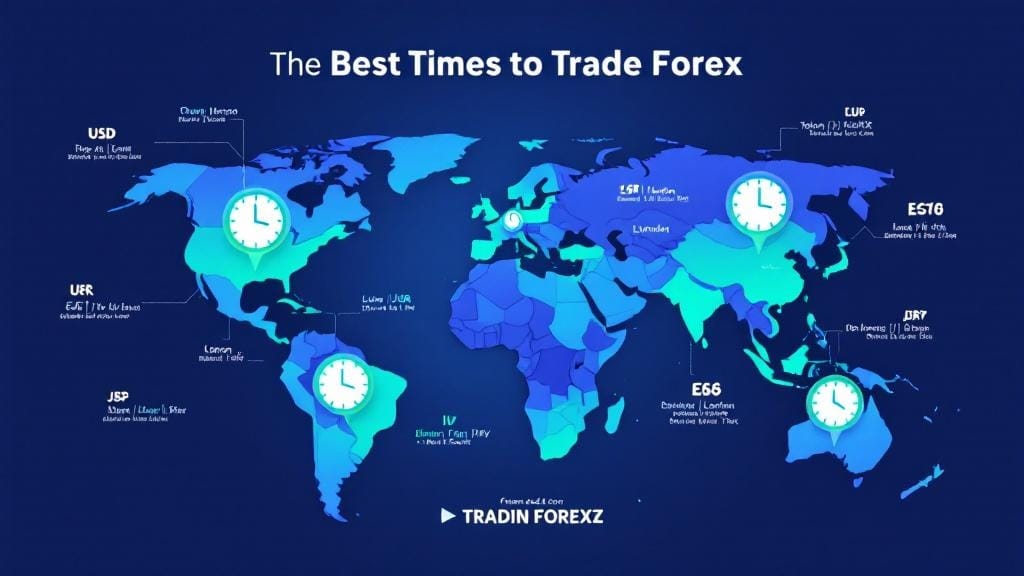
Forex trading is a dynamic market that operates 24 hours a day, 5 days a week, across various time zones. For traders, understanding the best times to trade forex is crucial in maximizing profit potential. With the ability to trade at any time, it’s important to recognize when market activity is most favorable. This guide delves into the optimal trading hours, strategies to use during different forex sessions, and tips to navigate the volatile market based on time zone preferences.
Whether you’re a beginner or an experienced trader, this post will equip you with the knowledge to trade at the right times and enhance your success.
What Are the Best Times to Trade Forex?
The forex market opening hours span across major global trading sessions. However, the best forex trading hours vary depending on market volatility and trading sessions. Here’s a breakdown of the different forex trading time zones and the ideal times to trade:
1. Asian Market Trading Hours (Tokyo Session)
The Asian market trading hours, starting with the Tokyo session, are one of the key forex trading periods. The Tokyo session opens at 12:00 AM UTC and closes at 9:00 AM UTC. While this session is not as volatile as others, it does present opportunities for currency pairs involving the Japanese Yen (JPY), such as USD/JPY and EUR/JPY.
- Best time to trade currency pairs: USD/JPY, EUR/JPY, AUD/USD
- Volatility: Moderate, but generally lower compared to the London and New York sessions.
2. European Forex Trading Hours (London Session)
The London forex session is often regarded as the most important trading session in forex due to the high liquidity and volatility. The London market opens at 8:00 AM UTC and closes at 5:00 PM UTC. This session overlaps with both the Tokyo and New York sessions, providing excellent opportunities for traders.
- Best time to trade currency pairs: EUR/USD, GBP/USD, USD/CHF
- Volatility: High, with significant price movements due to market overlap and active economic data releases.
3. New York Forex Session
The New York forex session opens at 1:00 PM UTC and closes at 10:00 PM UTC. Similar to the London session, the New York session is crucial due to the large number of traders and institutional participation. It is considered to be the second most volatile session after London, with high liquidity and price movement.
- Best time to trade currency pairs: EUR/USD, GBP/USD, USD/JPY
- Volatility: Very high, especially when overlapping with the London session.
The Importance of Trading During Session Overlaps
One of the key strategies to optimize your trading hours is to focus on overlap trading hours. This occurs when two major forex sessions coincide, creating higher volatility and trading volume.
For example, the London-New York overlap between 1:00 PM and 5:00 PM UTC is one of the best times to trade forex. The overlap creates an opportunity for rapid price movements, especially for currency pairs like EUR/USD, which is one of the most traded pairs globally.
- Best overlap for trading: London + New York session (1:00 PM – 5:00 PM UTC)
- Why trade during overlap: Increased volatility and liquidity allow for more trading opportunities, making it ideal for scalping or day trading strategies.
Key Strategies for Trading During Different Forex Sessions
Each trading session has its own characteristics, and successful traders adapt their strategies based on the time of day. Here are some tips on which strategies work best during different forex trading sessions:
1. Asian Session (Tokyo)
- Strategy: During the Asian session, markets tend to be less volatile. Focus on range-bound trading strategies where you identify price levels of support and resistance, and trade within that range. The Forex market volatility is typically lower, so scalping and short-term trades are less common.
- Best pairs to trade: USD/JPY, AUD/USD
2. London Session
- Strategy: The London forex session is ideal for trend-following strategies due to the higher volatility and momentum in the market. This is also a great time for breakout trading, where you can capitalize on price movements that occur after key economic data releases.
- Best pairs to trade: EUR/USD, GBP/USD, EUR/GBP
3. New York Session
- Strategy: The New York forex session sees a lot of movement and is perfect for trend-following and momentum strategies. The overlap with the London session creates ideal conditions for traders to profit from swift price changes.
- Best pairs to trade: EUR/USD, GBP/USD, USD/JPY
How to Determine the Best Time to Trade Currency Pairs
Choosing the right time to trade depends on the currency pair analysis and its associated volatility. Certain pairs are more volatile during specific times, so it’s important to plan your trading schedule accordingly.
- EUR/USD: The most traded currency pair, ideal for both the London and New York sessions, especially during overlap hours.
- GBP/USD: This pair tends to see more volatility during the London session and into the New York session.
- USD/JPY: Best traded during the Tokyo session or at the overlap of the London session.
For beginners, it’s wise to focus on the more liquid pairs during major trading sessions. The best forex trading hours for beginners are during the London or New York sessions when there’s ample liquidity and clearer trends.
Trading Tips to Maximize Profit During the Best Times
Maximizing your trading profits involves more than just choosing the right session—it requires a combination of the right strategy, discipline, and tools.
1. Use Technical Indicators
Leverage indicators like the Relative Strength Index (RSI), Moving Averages, or Bollinger Bands during the most volatile trading hours. These tools help identify overbought or oversold conditions, trend reversals, and market trends.
2. Economic Calendar Awareness
Keep an eye on major economic news releases that impact forex markets. Announcements like the U.S. Non-Farm Payroll or ECB monetary policy meetings can significantly affect currency movements during specific sessions.
3. Practice Risk Management
With increased volatility, risk management becomes essential. Set stop-loss orders, use proper position sizing, and never risk more than 1-2% of your trading capital per trade.






Comments (0)