
When you’re driving, the last thing you want to think about is breaking down on the side of the road. But, unfortunately, car troubles can happen when you least expect them. Whether it’s a flat tire, a dead battery, or an emergency breakdown, knowing you have car insurance with roadside assistance can give you peace of mind.
In this blog post, we’ll dive into everything you need to know about car insurance with roadside assistance—what it is, what’s covered, why it’s important, and how you can choose the best plan for your needs. Let’s ensure you’re fully prepared for any bumps in the road.
What is Car Insurance with Roadside Assistance?
Car insurance with roadside assistance is a type of auto insurance coverage that offers added support in the event your car breaks down or you experience an emergency while on the road. It’s essentially a “safety net” that ensures you’ll have access to services like towing, tire changes, battery jump-starts, and more—without having to pay out of pocket for each service.
The Importance of Roadside Assistance in Car Insurance
Roadside assistance coverage isn’t mandatory, but it’s a smart add-on that provides crucial support during unexpected situations. Imagine you’re driving home from work and your car suddenly stops due to engine failure. Without roadside assistance, you’d have to arrange a tow truck, and it could cost you a significant amount of money.
On the flip side, with roadside assistance included in your car insurance, you’ll have 24/7 access to emergency services that can help get you back on the road quickly.
Key Benefits of Roadside Assistance Coverage
Here are a few compelling reasons why car insurance with roadside assistance is worth considering:
1. Peace of Mind
You don’t have to worry about getting stuck in unfamiliar areas. Knowing you can call for help anytime, day or night, gives you confidence.
2. Cost-Effective
Roadside assistance services can often be pricey if paid for individually. With car insurance that includes this feature, you’re typically saving money in the long run.
3. Convenience
Instead of hunting down a tow truck or trying to figure out how to fix a flat tire on your own, roadside assistance provides you with immediate help, making a stressful situation much more manageable.
4. Comprehensive Coverage
Many policies bundle roadside assistance with other coverage options like towing services, flat tire repairs, and battery jump-starts, making it a convenient, all-in-one solution.
What Does Roadside Assistance Coverage Include?
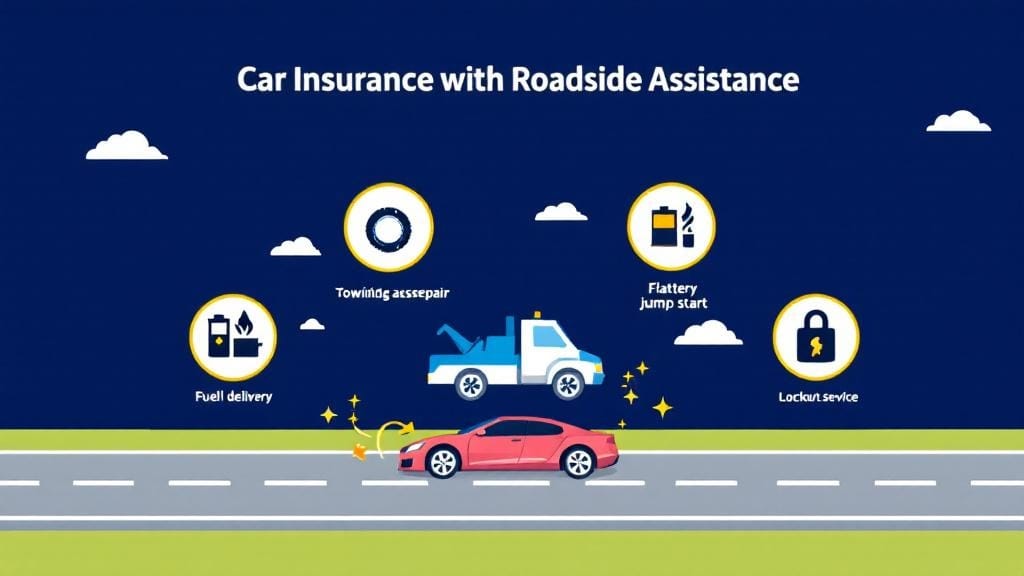
While the exact services offered may vary depending on the insurance provider, most car insurance policies with roadside assistance offer a range of services that ensure you’re taken care of in the event of an emergency. Here’s a breakdown of typical roadside assistance coverage:
1. Flat Tire Service
If you’re stuck with a flat tire, the service will help you change it with your spare, or in some cases, provide a new tire if necessary.
2. Battery Jump-Start
A dead battery is one of the most common causes of car breakdowns. Roadside assistance can quickly jump-start your car and get you back on the road.
3. Lockout Service
Accidentally locking yourself out of your car is frustrating, but with this service, help is just a phone call away. Your insurance company will send someone to unlock your vehicle.
4. Emergency Towing
If your car is too damaged to drive, emergency towing will take your vehicle to a nearby mechanic or an auto repair shop of your choice. Coverage usually includes a set number of towing miles.
5. Fuel Delivery Assistance
Running out of gas can be an embarrassing and inconvenient situation. With roadside assistance, you can have fuel delivered to you, so you’re not left stranded.
6. Vehicle Breakdown
Whether it’s a mechanical issue or something else, roadside assistance can help with minor repairs or tow your car to a mechanic if needed.
7. Trip Interruption Coverage
If you’re traveling far from home and experience a breakdown, some policies offer compensation for lodging, meals, or alternate transportation while your car is being repaired.
Types of Roadside Assistance Coverage
When choosing car insurance with roadside assistance, it’s important to understand the different types of coverage available. These are typically broken down into:
1. Basic Roadside Assistance Coverage
This is a basic plan that covers the essentials like towing, flat tire changes, and battery jump-starts. It’s usually ideal for those who just want the essentials at an affordable price.
2. Comprehensive Roadside Assistance Coverage
Comprehensive coverage includes everything in basic plans, plus additional services like trip interruption and lockout services. This plan is best for frequent drivers or those who want maximum peace of mind.
3. Pay-Per-Use Roadside Assistance
Some providers offer roadside assistance on a pay-per-use basis. This means that if you need help, you’ll be charged for each service. While this might seem cheaper upfront, it could be more costly if you need assistance frequently.
Best Car Insurance with Roadside Assistance: How to Choose the Right Policy
Choosing the best car insurance with roadside assistance isn’t a one-size-fits-all process. Here are a few tips to help you find the right policy for your needs:
1. Assess Your Driving Habits
-
If you drive long distances regularly or often travel to remote areas, you might want comprehensive coverage to ensure you’re always covered.
-
For city drivers who mostly stick to local routes, a basic plan could suffice.
2. Check the Coverage Limits
Make sure to understand what your roadside assistance covers and whether there are limits to services like towing or trip interruption. Some policies may only cover a set number of towing miles.
3. Compare Prices
Roadside assistance is usually an affordable add-on, but pricing can vary from one insurer to another. Shop around for the best deal, but don’t sacrifice quality for price.
4. Look for 24/7 Support
Emergencies can happen at any time, so be sure your provider offers round-the-clock support. Many insurers provide 24/7 roadside assistance as a standard feature.
5. Consider Additional Services
Some car insurance policies with roadside assistance offer perks like concierge services or access to a network of trusted mechanics. These extra services can be helpful in stressful situations.
Frequently Asked Questions
1. What is the difference between roadside assistance and car insurance?
Roadside assistance is an additional service offered with car insurance policies, designed to help you when you break down or face other emergencies on the road. Car insurance, on the other hand, covers damages from accidents, theft, and other incidents.
2. Can I add roadside assistance to my existing car insurance?
Yes, most insurance companies allow you to add roadside assistance to your existing policy. It’s often a low-cost add-on that can save you money and stress in the event of an emergency.
3. How much does roadside assistance coverage cost?
The cost of roadside assistance varies, but it typically ranges from $10 to $30 per year. Some insurers include it as part of their comprehensive car insurance package.
4. Does roadside assistance cover all types of breakdowns?
Roadside assistance generally covers minor mechanical issues, flat tires, and other common breakdowns. However, it may not cover major mechanical failures that require extensive repairs.
5. Can I use roadside assistance if I’m in a different state or country?
Many insurance policies offer nationwide coverage, and some even extend coverage to other countries. Be sure to check with your insurer to confirm what’s included in your plan.





Comments (0)