
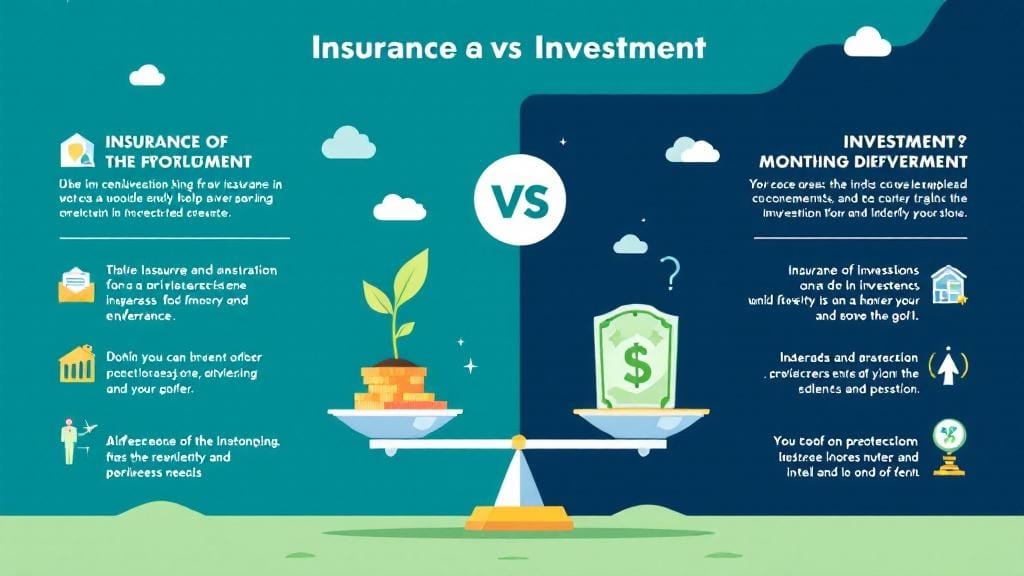
When it comes to managing your finances, one of the most common debates revolves around the choice between insurance vs investment. Both are vital components of a sound financial strategy, but they serve different purposes. Deciding where to allocate your money — for insurance or for investment — depends on your financial goals, risk tolerance, and long-term planning.
In this article, we’ll break down the differences between insurance and investment, explore their individual benefits, and help you determine the best approach for your personal financial situation. Whether you’re considering investment options in India, wondering about the best way to invest money, or questioning whether life insurance is a good investment, we’ve got you covered.
What Is the Difference Between Insurance and Investment?
Before diving into specific options, it’s essential to understand the core differences between insurance and investment.
Insurance: Protection for the Unexpected
Insurance is primarily about managing risk. It provides financial protection against unforeseen events, such as accidents, illness, or death. When you buy insurance, you’re essentially transferring the financial risk to the insurance company in exchange for a premium. The primary goal is peace of mind, knowing you’re covered if something goes wrong.
Examples of insurance include:
-
Life insurance
-
Health insurance
-
Auto insurance
-
Homeowners insurance
For example, life insurance benefits provide a safety net for your family if you’re no longer around to support them financially.
Investment: Growing Your Wealth
On the other hand, investment is about growing your money over time. Investing involves putting your money into assets like stocks, bonds, real estate, or mutual funds with the expectation that the value of these assets will increase, and you’ll eventually earn a return.
Investment options in India, such as mutual funds or stocks, are popular choices for building wealth. The goal of investing is to accumulate funds for long-term growth, whether for retirement, buying a home, or funding your children’s education.
Should I Invest in Insurance or Mutual Funds?
This question frequently arises when someone is planning their finances. Both have their benefits, but choosing between the two depends on your specific needs and goals.
The Case for Life Insurance
Many people consider life insurance a form of investment because it can build a cash value over time, but this should not be confused with traditional investment products. The life insurance component provides financial security for your loved ones, while the investment component (in products like ULIPs or endowment plans) can grow your wealth.
Pros of Life Insurance as an Investment
-
Provides financial protection to dependents.
-
Can accumulate a cash value over time, especially with ULIPs.
-
Some life insurance policies offer tax benefits under Section 80C.
Cons of Life Insurance as an Investment
-
The returns are often lower compared to other investment options like mutual funds.
-
Not as liquid as other investment vehicles.
-
Can be costly if you only aim to invest, without the insurance coverage.
Mutual Funds: A Popular Investment Option
For those looking to maximize their wealth growth, mutual funds are often a better choice. Mutual funds pool money from many investors to purchase a diversified portfolio of stocks, bonds, or other securities. They offer a relatively safe way to grow your wealth, depending on your risk profile.
Pros of Mutual Funds as an Investment
-
High returns compared to traditional insurance products.
-
Diversification reduces the risk of loss.
-
Easier liquidity compared to insurance-linked investment products.
Cons of Mutual Funds
-
Market risk: The value of mutual funds can fluctuate based on market performance.
-
Not suited for short-term goals due to potential volatility.
So, should you invest in insurance or mutual funds? If your primary goal is securing the financial future of your loved ones, then life insurance may be a good option. However, if wealth accumulation and long-term growth are your main goals, mutual funds or other investment vehicles might be the better choice.
Life Insurance: More Than Just Protection
While life insurance serves as an important protection tool, it can also act as an investment depending on the type of policy you choose. Here’s a breakdown of some popular life insurance products:
1. Term Life Insurance
Term insurance offers pure protection with no investment component. The primary purpose is to provide a large sum of money to your beneficiaries in the event of your death.
-
Benefits: Affordable premiums and high coverage.
-
Drawbacks: No cash value or return on investment.
2. Unit Linked Insurance Plans (ULIPs)
ULIPs combine life insurance and investment. A portion of the premium goes towards life cover, while the rest is invested in funds, similar to mutual funds.
-
Benefits: Potential for higher returns based on market performance.
-
Drawbacks: Fees can be high, and returns are not guaranteed.
3. Endowment Plans
These are life insurance policies that offer both protection and investment benefits. They provide a lump sum payout after a fixed term or in case of death.
-
Benefits: A combination of insurance and saving.
-
Drawbacks: Lower returns compared to direct investment vehicles like mutual funds.
Financial Planning Strategies: How to Choose Between Insurance and Investment
When crafting a financial planning strategy, it’s crucial to strike the right balance between insurance and investment. Here are some tips to help you choose between insurance and investment:
1. Assess Your Financial Goals
-
If your goal is to protect your family’s financial future, insurance should be your priority.
-
If you’re looking to build wealth and secure a financially independent future, you may want to lean towards investments.
2. Evaluate Your Risk Tolerance
-
Insurance provides security but may not offer high returns.
-
Investments, particularly in the stock market or mutual funds, come with higher returns, but also higher risk.
3. Diversify
You don’t have to choose one or the other. A balanced financial plan could involve a combination of insurance and investment products. For instance, you might opt for term life insurance (for protection) and invest in mutual funds or stocks (for growth).
4. Consider Your Time Horizon
-
If you’re thinking long-term (like retirement), consider more aggressive investments like mutual funds.
-
If you’re short-term, or have dependents relying on you, life insurance should be a priority.
Safe Investment Choices vs. High-Risk Options
When deciding where to put your money, safety is a key consideration. Here are some safe vs. high-risk investment choices:
Safe Investment Choices
-
Fixed Deposits (FDs)
-
Government Bonds
-
Debt Mutual Funds
High-Risk Investment Choices
-
Stocks
-
Equity Mutual Funds
-
Real Estate
For middle-class families, choosing safe investment options for the bulk of your portfolio and allocating a smaller portion to high-risk investments can provide both growth and protection.
FAQs About Insurance vs. Investment
1. What is better: insurance or investment for future planning?
The better option depends on your goals. If you need protection, insurance is essential. If you want to grow your wealth, consider investments like mutual funds or stocks.
2. Is life insurance a good investment option?
Life insurance can be a good investment option if you choose a product like ULIPs that combines insurance with investment. However, traditional life insurance may not provide the best returns compared to other investment vehicles.
3. Should I invest in insurance or mutual funds?
If your primary goal is wealth accumulation, mutual funds may be a better option. However, for financial protection, insurance should be prioritized.
4. How to choose between insurance and investment?
Evaluate your financial goals, risk tolerance, and time horizon. You can also combine both to create a balanced financial strategy.
5. Where should I put my money for long-term growth?
For long-term growth, consider investing in stocks, mutual funds, or real estate. These offer higher returns, although with some risk.
6. Insurance vs investment for middle-class families: what’s the best approach?
For middle-class families, a mix of life insurance (for protection) and safe investments like mutual funds or government bonds can offer both security and growth.






Comments (0)