
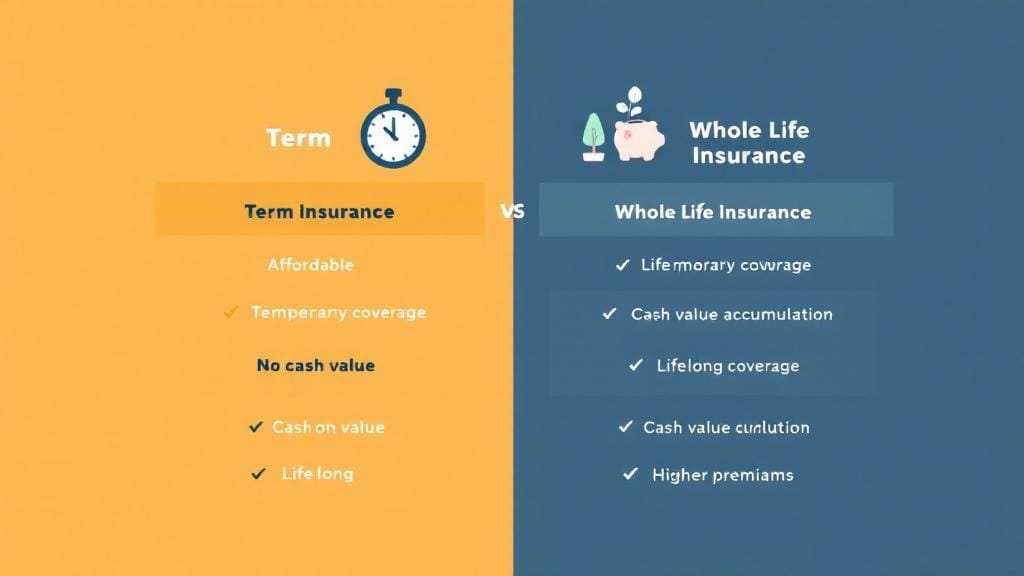
When it comes to life insurance, many individuals find themselves stuck between two popular options: term insurance and life insurance. While both provide coverage for unforeseen events, understanding the key differences between term life insurance and whole life insurance is crucial to making an informed decision about what suits your needs best. In this article, we’ll dive into the differences between term and life insurance, the pros and cons of term life insurance, and answer the big question: Is term insurance better than life insurance?
What is Term Insurance?
Before comparing, let’s first break down the basics of term insurance.
Term insurance is a type of life insurance that provides coverage for a specific period or term, usually 10, 20, or 30 years. If the insured person passes away during this term, their beneficiaries receive the death benefit. The policy expires after the set term, and there are no maturity benefits—meaning no payout if the person outlives the policy term.
What is Life Insurance?
On the other hand, life insurance generally refers to whole life insurance, a permanent form of coverage that lasts a lifetime, provided premiums are paid. Whole life policies build cash value over time, and policyholders may borrow against it or use it for other financial needs.
Now, let’s look into the key differences.
Term Insurance vs. Whole Life Insurance: The Key Differences
Understanding the difference between term and life insurance is crucial in deciding which is more suitable for your financial needs.
1. Duration of Coverage
-
Term Life Insurance: Provides coverage for a set number of years (e.g., 10, 20, or 30 years). Once the term ends, the coverage expires.
-
Whole Life Insurance: Covers you for your entire life, as long as premiums are paid. No need to worry about renewal or expiry.
2. Premiums and Affordability
-
Term Life Insurance: Typically more affordable than whole life insurance due to its limited duration and lack of cash value.
-
Whole Life Insurance: Premiums tend to be significantly higher because it offers lifelong coverage and builds cash value over time.
3. Cash Value Accumulation
-
Term Life Insurance: Does not accumulate any cash value. It’s a pure protection plan, meaning it only pays out if the insured person passes away during the term.
-
Whole Life Insurance: Builds cash value over time, which can be borrowed against or cashed out later in life.
4. Death Benefit Payout
-
Both policies offer a death benefit payout to beneficiaries. The amount depends on the policy you choose, but term insurance is often more straightforward, providing a larger payout for a lower premium.
5. Policy Loans and Flexibility
-
Term Life Insurance: No option for loans or flexibility, as it is purely protective.
-
Whole Life Insurance: Offers the ability to take out loans against the policy’s cash value.
Which is Better: Term or Life Insurance?
Now, the big question: Which is better—term or life insurance?
Pros of Term Life Insurance
-
Affordability: Term life insurance is generally more affordable than whole life insurance, making it ideal for individuals seeking coverage without straining their budget.
-
Simplicity: The policy is straightforward, offering protection without the complexity of cash value accumulation or investment elements.
-
Flexibility: You can purchase a term policy for the number of years you need coverage (e.g., until your children are financially independent or until your mortgage is paid off).
Cons of Term Life Insurance
-
No Cash Value: Unlike whole life insurance, term policies don’t build any cash value, which means there’s no savings component.
-
Expiration: Once the term ends, the policy expires, and there’s no payout if the insured person outlives the policy.
-
Increasing Premiums: After the initial term, renewing a term life insurance policy may come with higher premiums, especially if your health has declined.
Pros of Whole Life Insurance
-
Lifetime Coverage: Whole life insurance offers protection for your entire life, giving you peace of mind.
-
Cash Value Accumulation: The policy builds cash value over time, which you can borrow against or use as an asset.
-
Stable Premiums: Premiums typically remain the same throughout the life of the policy, providing stability for long-term financial planning.
Cons of Whole Life Insurance
-
Higher Premiums: Whole life insurance premiums are considerably more expensive than term insurance due to its lifelong coverage and cash value accumulation.
-
Complexity: These policies can be complex, with options to consider regarding the cash value component and dividends.
Why Choose Term Insurance?
If you’re wondering why choose term insurance, here are some compelling reasons:
-
Affordability: If you’re looking for an affordable insurance option with no intention to use it as an investment vehicle, term insurance is a great choice.
-
Financial Planning: You can align your term policy’s duration with your financial goals, such as covering income loss, paying off a mortgage, or securing your children’s future education.
-
Simplicity: It’s a clear, no-frills product designed for pure protection, which appeals to individuals who don’t need the extra complexity of whole life insurance.
Term Life Insurance Benefits Over Whole Life Insurance
Some individuals choose term insurance for its benefits over life insurance:
-
Affordability: Premiums for term insurance are much lower, allowing you to have more coverage for a fraction of the price.
-
No Investment Requirement: With term insurance, you don’t have to worry about market fluctuations or the investment risks tied to whole life insurance policies.
-
Flexible Coverage: Term life policies allow you to select coverage duration based on your needs.
Long-Term vs. Permanent Life Insurance
Understanding the long-term vs. permanent life insurance debate is another key factor in choosing between term and life insurance.
-
Long-Term Insurance (Term Life): Provides coverage for a set number of years. It’s perfect for temporary needs, such as ensuring your family’s financial stability during your working years.
-
Permanent Life Insurance (Whole Life): Offers lifelong protection, making it suitable for individuals who want a policy that serves as both protection and an investment over the course of their life.
FAQs About Term Insurance and Life Insurance
1. What is the main difference between term and life insurance?
Term insurance provides coverage for a specific term, while life insurance (whole life) offers lifelong protection with an added investment component through cash value accumulation.
2. Is term life insurance worth it?
Yes, especially for people seeking affordable coverage for a specific period. It is perfect for temporary financial obligations such as a mortgage or children’s education.
3. Which is better: term or life insurance?
It depends on your needs. If you need affordable, temporary protection, term life is better. If you prefer lifelong coverage with a cash value accumulation, whole life is ideal.
4. How does whole life insurance work?
Whole life insurance offers lifelong coverage and builds cash value, which you can borrow against or use as an asset for future financial needs.
5. Can you convert term insurance to life insurance?
Many term insurance policies offer a convertible option, allowing you to convert the policy to a whole life insurance policy without a medical exam.
6. What are the benefits of term insurance over life insurance?
Term insurance is cheaper, simpler, and more flexible. It provides coverage for a specific period without the extra cost of cash value accumulation.
7. What factors should I consider when choosing between term and life insurance?
Consider your budget, coverage needs, and long-term financial goals. Term insurance is great for temporary needs, while whole life insurance is suitable for long-term protection and investment.
Conclusion: Is Term Insurance Better Than Life Insurance?
Ultimately, the answer to “Is term insurance better than life insurance?” depends on your unique needs. If you’re looking for affordable coverage for a specific period of time, term insurance is an excellent choice. However, if you’re interested in permanent coverage with the added benefit of cash value accumulation, whole life insurance may be more suitable.
Before making a decision, it’s important to analyze your financial situation, your goals, and how much coverage you need to protect your loved ones. Whatever path you choose, having insurance is a vital part of financial planning and securing the future for you and your family.






Comments (0)