
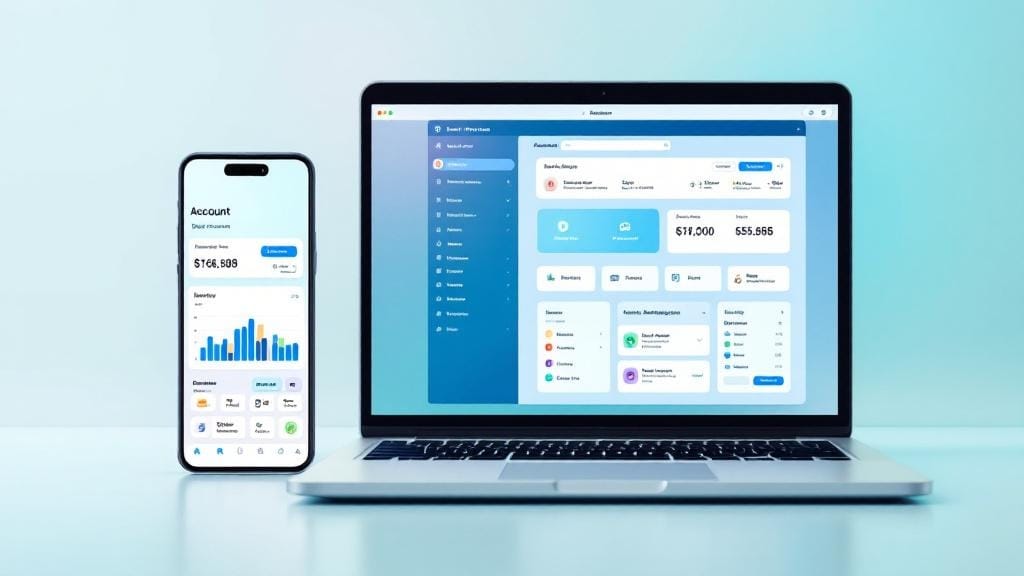
In today’s digital world, banking has become more accessible than ever before. Gone are the days when you had to visit a physical bank branch for every transaction. With the rise of technology, mobile banking and net banking have revolutionized how we handle finances. But what’s the real difference between mobile banking and net banking? Which one is safer, more convenient, and ultimately better for you?
In this article, we’ll dive into the pros and cons of mobile banking and net banking, explore their differences, and help you determine which option is best suited for your banking needs.
What is the Difference Between Mobile Banking and Net Banking?
At a glance, both mobile banking and net banking serve the same primary function: to allow users to manage their finances online. However, there are key differences between the two.
Mobile Banking
Mobile banking refers to using a smartphone app to access and manage your bank account. These apps are designed specifically for mobile devices and offer a range of banking services at your fingertips, from checking balances to transferring money.
Net Banking (Internet Banking)
Net banking, or internet banking, involves using a web browser on a computer or tablet to access your bank account. It provides all the features of mobile banking but is typically designed for larger screens, offering a more comprehensive, often more detailed, interface.
Key Differences Between Mobile and Net Banking
| Feature | Mobile Banking | Net Banking |
|---|---|---|
| Platform | Mobile apps (smartphones/tablets) | Desktop or laptop browsers |
| User Interface | Optimized for small screens | Larger, detailed interface |
| Security Features | Biometric login, PIN, 2FA | Username, password, 2FA |
| Speed | Fast and convenient for quick tasks | Can be slower, especially on older devices |
| Convenience | Highly portable, always available | Requires a device with internet access |
| Accessibility | Easy to use on the go | Ideal for larger transactions, more detailed management |
Pros and Cons of Mobile Banking vs. Net Banking
Both options have their advantages and disadvantages. Let’s break down the mobile banking benefits and internet banking advantages and disadvantages so you can make an informed decision.
Pros of Mobile Banking
1. Convenience
Mobile banking allows you to perform banking transactions wherever you are. Whether you’re on a train, at the coffee shop, or even lying on the couch at home, you can manage your finances with a few taps. This convenience makes mobile banking ideal for quick transactions and managing your account on the go.
2. User-Friendly
Mobile apps are generally designed with simplicity and ease of use in mind. The interface is often streamlined, so even users with limited tech knowledge can easily navigate through their banking services.
3. Mobile Banking Security
While security is a concern for any online service, mobile banking security has improved over time. Many apps now offer features like biometric authentication, two-factor authentication (2FA), and automatic encryption of sensitive information.
4. Real-Time Notifications
One of the greatest benefits of mobile banking is receiving real-time alerts for account activities, such as deposits, withdrawals, or low balances. This can help you monitor your account and prevent fraudulent activities.
5. Mobile Banking Benefits for Quick Transfers
If you need to send money or make a payment quickly, mobile banking apps allow you to do so instantly. Mobile transfers are usually faster and more convenient than using a desktop site, especially when you’re out and about.
Cons of Mobile Banking
1. Limited Features Compared to Net Banking
While mobile banking apps have most basic features, they may lack the more advanced tools available on net banking platforms. Tasks like account statement generation, fixed deposits, or in-depth financial analysis are often easier to perform on a desktop site.
2. Security Concerns
Despite the advances in mobile security, smartphones can still be vulnerable to malware, phishing attacks, and data theft. If you don’t practice safe habits, such as updating your app regularly or using strong passwords, your account could be at risk.
3. Device Dependency
You can only use mobile banking on your smartphone or tablet. If your device is lost, stolen, or damaged, you might find yourself temporarily unable to access your bank account unless you have another device available.
Pros of Net Banking
1. Full Range of Banking Services
Net banking typically offers a more extensive list of features than mobile banking apps. It’s perfect for managing more complex financial activities, such as setting up recurring payments, applying for loans, or generating detailed statements for tax purposes.
2. Larger Interface for Detailed Management
On a desktop, you have more screen space, which can make tasks like reviewing account statements or conducting research more manageable. This makes net banking more suited for detailed financial planning and overseeing multiple accounts.
3. More Secure for Sensitive Transactions
Because of the larger screen and more secure authentication methods, net banking can feel safer when handling larger sums of money. Additionally, using a well-protected personal computer can be more secure than using a public or shared device.
4. Works Better for Seniors
For older users who may not be as comfortable with smartphones, net banking can feel more natural due to the larger interface and use of a keyboard. This makes it an ideal choice for seniors who prefer browsing and managing their banking activities from a desktop.
Cons of Net Banking
1. Limited Mobility
Unlike mobile banking, net banking requires a stable internet connection and access to a computer or laptop. You can’t perform banking tasks while on the move, making it less convenient for users who need flexibility.
2. Slower Process
Compared to the quick taps on a mobile app, net banking can often feel slower, especially if you’re only using it for simple tasks like transferring money or checking balances.
3. Increased Risk of Phishing
While net banking is secure, users are more likely to fall victim to phishing attacks or malware on their desktop if they’re not careful. With more complex security protocols, hackers may attempt to exploit vulnerabilities on your computer.
Which is Safer: Mobile Banking or Net Banking?
When it comes to safety, both options come with their own set of risks. Mobile banking security has significantly improved with features like fingerprint scanning and app-specific two-factor authentication (2FA). However, it’s essential to ensure your device is secure with the latest software updates and anti-virus protection.
On the other hand, net banking is often considered more secure for high-value transactions because desktop computers typically have more robust security features than mobile devices. However, desktop banking requires you to be more cautious of phishing websites and malware.
Both methods are relatively safe if used with caution, but in general, net banking tends to offer more control over security settings, such as firewalls and antivirus software. Mobile banking, however, offers more convenience and portability with improved authentication.
FAQs About Mobile Banking vs. Net Banking
1. What is the difference between mobile banking and net banking?
Mobile banking uses smartphone apps to manage your finances, while net banking involves using a browser on a computer to access and manage your account. Mobile banking is more portable, while net banking offers a larger interface and more features.
2. Which is safer: mobile banking or net banking?
Both mobile banking and net banking are secure when used properly. Mobile banking offers features like biometric login, while net banking benefits from desktop security measures. The safest choice depends on your device and habits.
3. What are the pros and cons of mobile banking and net banking?
Mobile banking is convenient, user-friendly, and portable, but may lack advanced features and security. Net banking provides a wider range of services and better security, but it lacks mobility and can feel slower.
4. How does net banking work compared to mobile apps?
Net banking offers a full-featured desktop interface, allowing users to manage multiple accounts and perform detailed financial activities. Mobile apps, on the other hand, focus on quick transactions and easy access.
5. Is internet banking better than mobile banking for seniors?
Internet banking might be better for seniors who are not as comfortable with smartphones. The larger interface and keyboard navigation are often easier for older users to navigate.
6. Benefits of using mobile banking apps over desktop sites?
Mobile banking apps offer portability, instant alerts, and easy access for daily tasks. They are optimized for quick transactions and can be accessed anytime, anywhere, unlike desktop sites that require a specific location.
7. Mobile banking vs. online banking: which is better for daily use?
For daily use, mobile banking is often better due to its convenience and speed. It’s ideal for quick transactions, checking balances, and managing finances on the go.






Comments (0)