
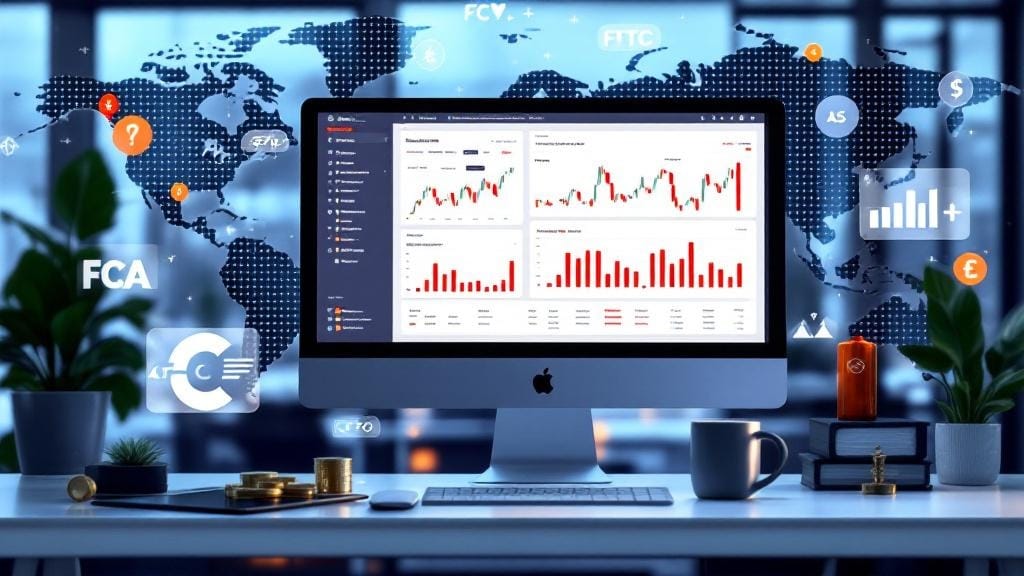
The world of forex trading is vast, exciting, and filled with numerous opportunities. But with great opportunities come great risks, especially when dealing with unregulated or poorly regulated forex brokers. The key to navigating this world safely and profitably is finding a regulated forex broker. In this ultimate guide, we’ll walk you through everything you need to know about regulated forex brokers, their importance, how to choose one, and the various regulatory bodies that make the forex market a safer place.
What are Regulated Forex Brokers?
In simple terms, regulated forex brokers are financial service providers that operate under the strict oversight of a relevant financial authority. These regulatory agencies enforce specific standards and guidelines that ensure transparency, fairness, and security in the trading process. When you trade with a regulated forex broker, you can be confident that your funds are protected, and the broker is adhering to laws designed to protect investors like you.
The key difference between regulated and unregulated brokers lies in the protection and accountability that regulated brokers provide. Regulated forex brokers are required to meet stringent operational standards, and they must regularly report to financial regulatory agencies.
Why Choose Regulated Forex Brokers?
1. Safety of Funds
The primary reason to choose regulated forex brokers is the safety of your funds. Regulatory bodies require brokers to segregate client funds from operational funds. This means that in the event of a broker’s insolvency, your funds remain protected.
2. Transparency
Regulated brokers are required to disclose certain information, such as the costs associated with trading, spreads, and any potential conflicts of interest. This transparency helps you make more informed decisions and reduces the likelihood of unexpected charges or losses.
3. Investor Protection
Many regulatory agencies provide compensation schemes that protect investors in case of broker insolvency or malpractice. For instance, the FCA (Financial Conduct Authority) in the UK and ASIC (Australian Securities and Investments Commission) in Australia have such schemes in place to help traders recover their funds.
4. Legal Recourse
Trading with a regulated forex broker gives you legal recourse. If a problem arises, you can file a complaint with the regulatory authority. In contrast, unregulated brokers can easily disappear, leaving traders with little to no legal protection.
Types of Forex Regulators
Understanding the different types of forex regulators is essential for choosing the right broker for your needs. Here are some of the most trusted and well-known financial regulatory agencies globally:
1. FCA (Financial Conduct Authority) – UK
The FCA is one of the most respected financial regulatory bodies in the world. Based in the United Kingdom, the FCA ensures that brokers under its jurisdiction comply with strict rules, promoting fairness and integrity in the financial markets. FCA-regulated forex brokers must meet capital requirements and adhere to client protection rules, offering a high level of safety for traders.
2. ASIC (Australian Securities and Investments Commission) – Australia
Australia is home to the ASIC, which is known for maintaining a strong regulatory framework for the forex market. ASIC-regulated forex brokers are required to follow strict guidelines related to transparency, trading practices, and the safety of client funds.
3. EU Regulators
The European Union has a unified regulatory framework for the forex market, which is governed by the European Securities and Markets Authority (ESMA). EU-regulated forex brokers adhere to strict standards that promote fair trading and investor protection, ensuring a safe environment for traders.
4. CFTC and NFA – USA
In the United States, forex brokers must be regulated by the Commodity Futures Trading Commission (CFTC) and the National Futures Association (NFA). These organizations ensure that brokers operate under a well-defined set of rules, providing traders with a high level of confidence when trading with US-regulated forex brokers.
5. Other Regulators
Other notable forex regulators include the FMA (Financial Markets Authority) in New Zealand, FSA (Financial Services Authority) in Japan, and FSCA (Financial Sector Conduct Authority) in South Africa.
How to Choose the Best Regulated Forex Broker
Choosing the right regulated forex broker can be a daunting task, but it doesn’t have to be. Here are some steps and tips that will guide you through the selection process:
1. Check the Regulatory Body
The first step is to check the regulatory body under which the broker operates. Make sure that the broker is licensed by a well-known and respected authority, such as the FCA, ASIC, or CFTC. Regulatory bodies are responsible for ensuring that brokers comply with stringent requirements, so this is an essential step.
2. Verify the Broker’s Reputation
A broker’s reputation can say a lot about their reliability and trustworthiness. Look for customer reviews, testimonials, and ratings from trusted sources. Ensure that the broker has a history of fair practices and has not been involved in any serious legal disputes or scandals.
3. Review the Broker’s Trading Platform
The trading platform is your main tool for executing trades, so it’s crucial to ensure that the broker provides an easy-to-use and reliable platform. Check if the broker supports popular platforms like MetaTrader 4 or MetaTrader 5, and see if the platform offers the necessary features, such as real-time charting, risk management tools, and trade execution speed.
4. Assess Fees and Spreads
Regulated brokers must be transparent about their fees and spreads. Compare the spreads and fees across different brokers, and choose one that offers competitive pricing without hidden costs. Brokers with low spreads can give you a significant edge in terms of cost-efficiency.
5. Check Customer Support
A good broker should offer excellent customer support. Ensure that the broker has 24/7 support and provides various communication channels like phone, email, and live chat. Test the customer support responsiveness and efficiency before making any commitment.
Risks of Unregulated Forex Brokers
While regulated brokers offer a range of benefits, trading with unregulated forex brokers carries significant risks. Some of the main risks associated with unregulated brokers include:
-
Lack of investor protection: Without regulatory oversight, your funds are at risk of being mismanaged or even lost in the event of broker insolvency.
-
Fraud: Unregulated brokers are more likely to engage in fraudulent practices such as price manipulation and misleading advertising.
-
No legal recourse: If a dispute arises, you may have no legal recourse since unregulated brokers are not accountable to any financial regulatory body.
-
Limited transparency: Unregulated brokers may not be required to disclose crucial information, such as pricing and business practices.
Global Forex Broker Regulation Standards
The regulatory framework for forex brokers varies by region, but most major jurisdictions require brokers to follow strict standards to ensure fairness and transparency. The main global standards for forex broker regulation include:
-
Client fund segregation: Brokers must separate client funds from their operational funds, ensuring that your money is protected.
-
Leverage limits: Most regulatory bodies impose limits on the leverage a broker can offer to prevent traders from taking excessive risks.
-
Financial reporting: Regulated brokers are required to provide regular reports to their regulatory body, ensuring transparency in their operations.
-
AML and KYC procedures: Brokers must comply with Anti-Money Laundering (AML) and Know Your Customer (KYC) regulations to prevent fraud and illegal activities.
Forex Compliance and Trading Security
When you trade with a regulated broker, you’re benefiting from their compliance with forex compliance standards that ensure fairness and security. These compliance measures include:
-
Transaction monitoring to detect suspicious activities.
-
Risk management protocols to protect traders from market volatility.
-
Data encryption to safeguard sensitive personal and financial information.
-
Regular audits to ensure the broker adheres to the regulatory requirements.
FAQs: Regulated Forex Brokers
1. What are the benefits of trading with regulated forex brokers?
Trading with regulated forex brokers ensures the safety of your funds, legal protection, and a transparent trading environment. Regulatory agencies enforce strict standards to protect investors and promote fairness.
2. How do I find the best-regulated forex brokers?
To find the best-regulated forex brokers, check their regulatory status, reputation, trading platforms, fees, and customer support. Ensure the broker is licensed by a reputable regulatory body such as the FCA, ASIC, or CFTC.
3. What happens if I trade with an unregulated forex broker?
Trading with an unregulated broker exposes you to risks such as fraud, lack of investor protection, and no legal recourse in case of disputes. Unregulated brokers are not held accountable by any financial authority.
4. What are the major forex regulatory bodies?
Some of the major forex regulatory bodies include the FCA (UK), ASIC (Australia), CFTC (USA), ESMA (EU), and NFA (USA). These authorities ensure that brokers operate under strict rules to protect traders.
5. How do forex regulations differ across countries?
Forex regulations vary by country, with some jurisdictions offering more stringent protections than others. EU, UK, Australia, and USA are known for their strong regulatory frameworks, while some smaller countries may have less stringent rules.
6. How do I verify if a forex broker is regulated?
You can verify if a broker is regulated by visiting the website of the relevant regulatory body and searching for the broker’s license number. Reputable agencies like the FCA, ASIC, and CFTC have online databases to check broker licenses.
7. What are the risks of unregulated brokers?
The risks of trading with unregulated brokers include exposure to fraud, lack of investor protection, and no legal recourse in case of disputes. Unregulated brokers are not held accountable by any regulatory body.



Comments (0)