
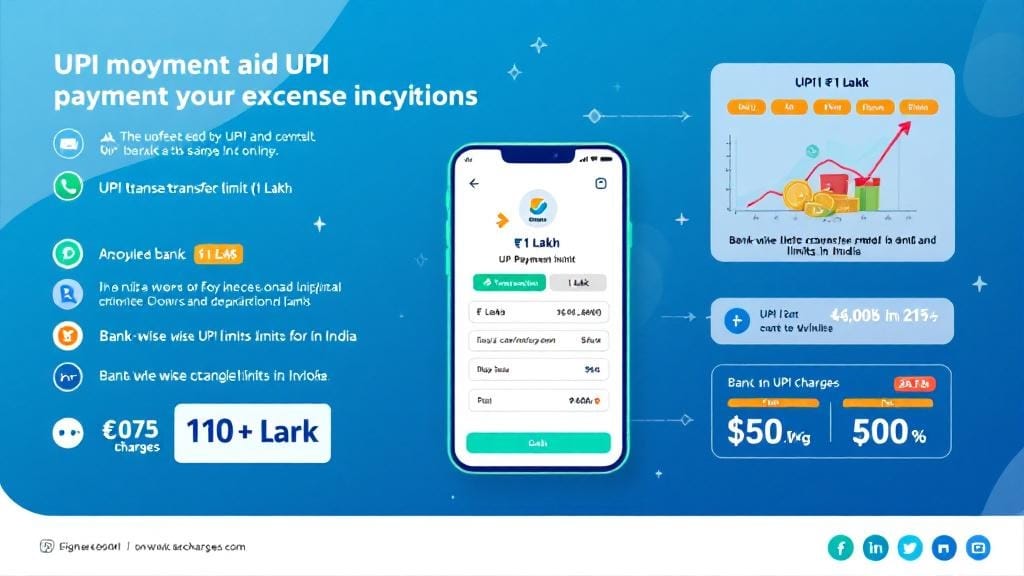
The Unified Payments Interface (UPI) has revolutionized the way we make payments in India. Whether it’s paying bills, transferring money, or shopping online, UPI has made everything fast, easy, and secure. However, one area that many users are often confused about is UPI transaction limits and the charges associated with it.
In this blog, we’ll break down UPI transaction limits, explain how UPI charges work, and help you navigate the rules around UPI payments for 2025. By the end of this article, you’ll have a clear understanding of UPI transaction limits, and you’ll know exactly what to expect when making payments through UPI.
Let’s dive in!
What is UPI and How Does it Work?
Before jumping into the specifics of UPI transaction limits and charges, let’s take a quick look at what UPI is.
UPI is a real-time payment system developed by the National Payments Corporation of India (NPCI). It allows users to transfer money between banks instantly via a smartphone application. UPI has simplified the digital payments landscape by offering a seamless and secure way to send and receive money without the need for physical cash or cards.
With UPI, you can transfer money between different banks, pay for services, make online purchases, and even send money to friends and family with just a few taps on your phone.
UPI Transaction Limits in 2025
UPI has set transaction limits to ensure secure payments and manage the flow of money across the system. These limits vary based on different factors like the bank you use, your account type, and whether you’re using UPI for a personal or business transaction.
1. UPI Transaction Limit Per Day
The UPI daily limit refers to the maximum amount you can transfer via UPI in a 24-hour period. For most users, the daily transaction limit for personal use is typically set to ₹1 lakh. This means you can transfer up to ₹1 lakh per day across multiple transactions.
However, the UPI limit per day can vary depending on the bank’s policies and whether your account is a regular savings account or a premium account.
2. UPI Transaction Limits for Different Banks in India
While the general UPI limit per day is ₹1 lakh, different banks in India may have their own set limits. Let’s take a look at the UPI bank-wise limit for some major Indian banks:
-
State Bank of India (SBI): ₹1 lakh per day
-
HDFC Bank: ₹1 lakh per day
-
ICICI Bank: ₹1 lakh per day
-
Axis Bank: ₹1 lakh per day
-
Bank of Baroda (BoB): ₹1 lakh per day
-
Punjab National Bank (PNB): ₹1 lakh per day
It’s important to note that these limits are subject to change and could be higher or lower depending on the bank’s policies.
3. UPI Transaction Limits for Businesses
If you are a business or merchant using UPI, the UPI limits for businesses may differ. Typically, businesses can use UPI for large transactions, but the limit for business transactions can vary depending on the nature of the transaction and the bank’s policies.
UPI Charges Explained
One of the major concerns many people have is whether UPI transactions come with any charges. Let’s clarify that for you.
Are There Any Charges for UPI Transactions?
The good news is that UPI transactions are usually free of cost for most users, especially when it comes to personal transactions. There are no charges for transferring money from one bank account to another via UPI, regardless of whether you are sending money to a friend or paying a merchant.
When Do UPI Charges Apply?
While personal UPI transactions are generally free, there are certain cases where UPI charges may apply, including:
-
Transaction Fee for Business Transactions: For businesses or merchants accepting payments through UPI, there may be a nominal charge for each transaction. These charges are typically low but vary based on the payment gateway or bank used.
-
UPI Transaction Charges for Exceeding Limits: If you exceed the UPI daily limit, you might be required to pay transaction fees for any amount exceeding the ₹1 lakh limit. While most banks do not charge fees for small overdrafts, larger sums may incur charges, especially if they are processed as part of a different payment system.
What Are the UPI Transfer Charges for 2025?
As of 2025, the general trend is that UPI remains free for personal users. However, it’s always a good idea to stay updated with any changes in UPI charges or transaction rules that may affect you.
How Much Money Can Be Transferred via UPI in a Day?
A common question that arises is, “What is the maximum amount I can transfer via UPI in a day?”
As we’ve already mentioned, the general UPI transaction limit per day is ₹1 lakh. However, the actual amount may depend on your bank’s policies and the type of account you hold. For example, if you’re using a premium account with certain banks, you may have the option to increase your daily transaction limit.
It’s also important to note that UPI transaction rules may vary slightly depending on your bank-wise limits. Always check with your bank to ensure you’re aware of your specific transaction limits.
Frequently Asked Questions (FAQs)
Let’s answer some of the most common questions people have about UPI transaction limits and charges.
1. What is the UPI transaction limit per day?
The typical UPI transaction limit per day is ₹1 lakh for most users. However, this limit may vary depending on the bank you use.
2. Are there any charges for UPI transactions?
For most personal transactions, UPI is free of charge. However, business transactions or exceeding your daily limit may incur small charges.
3. How much money can be transferred via UPI in a day?
You can transfer up to ₹1 lakh per day via UPI. But check your bank’s policies for any higher limits, especially for premium account holders.
4. UPI limits for different banks in India?
Most major banks have the same UPI limit of ₹1 lakh per day. Some examples are SBI, HDFC, ICICI, Axis, and Bank of Baroda.
5. Is there a fee for using UPI after a certain limit?
If you exceed the daily UPI limit (₹1 lakh), your bank may charge a fee depending on the nature of the transaction and the system used.
6. UPI transaction charges after daily limit exceeded?
If your transaction exceeds the daily limit, additional charges might apply. These charges vary depending on the bank and transaction type.
7. Latest UPI charges and transaction limits in 2025?
As of 2025, UPI remains mostly free for personal use, but business transactions may have a small fee. Always refer to your bank’s terms for any updates.






Comments (0)