

UPI vs Credit Card in India (2026): When Each Wins
UPI is free and instant. Credit cards earn rewards. The right payment rail for each transaction.
Anika Iyengar5 min readRead more
Verified 2 Aug
Tag
Editorial posts on FinWiz24 that are primarily about first card. Tags are applied during the weekly editorial review — not auto-generated — so every entry here is a piece our team judged relevant to this specific topic. Posts are sorted newest-first; use the page controls to load older entries.
UPI is free and instant. Credit cards earn rewards. The right payment rail for each transaction.
Interchange, finance charge, annual fee, late fee — the four revenue streams and what they mean for you as a cardholder.
How much credit-card fraud happens in India, who's most at risk, and the bank's zero-liability rule that protects you.
Invest the credit-card float, redeem rewards for flights, optimise for tax. The strategy that pays 7%+ on every rupee.
Credit cards at 42%–51% per annum; personal loans at 11%–22%. The math and the right tool for each need.
LazyPay, Simpl, ZestMoney — the BNPL option vs the credit card. The right tool for each spend.
Three lifetime-free cashback cards. Which one wins for your spending pattern?
Each payment method has a role. Using the right one for the right spend saves money and builds credit.
The right payment rail for every transaction. The split that maximises rewards and minimises friction.
The credit-card grace period is a free 18–25 day loan. Used well, it can earn interest on your own money.
A Merchant Category Code is a 4-digit number attached to every transaction. It controls rewards, milestones, and exclusions.
Tier-2 and tier-3 city residents face different credit-card realities. The right picks for non-metro India.
You have a salary account, a steady income, and zero credit history. Here's what to do in the first 12 months.
Beyond HDFC, ICICI, Axis, and SBI — the regional players that offer competitive cards for tier-2/3 city residents.
MCC, ECI, MITC, BT, EMI — the alphabet soup of credit-card language, decoded.
UPI is the dominant payment rail for small spend. Credit card is the right tool for big spend. Here's how to split.
Most banks require a salaried income for credit cards. Here's what students can do instead.
Paying only the minimum, missing payments, closing old cards — the mistakes that add up to thousands in lost rewards and fees.
Pay the full balance, never share your PIN, hotlist immediately on loss, and 7 more rules every cardholder should follow.
Secured cards require a fixed deposit; unsecured cards don't. Here's when each makes sense.
If you've ever carried a balance 'just for a few days', you've paid more than you think. The math, in plain terms.
Annual fee, late fee, finance charge, cash advance fee, EMI fee — what each one is, when it applies, and what it costs.
Both cards have a 16-digit number, a CVV, and a logo. The differences are in who pays, what it costs, and what you get back.
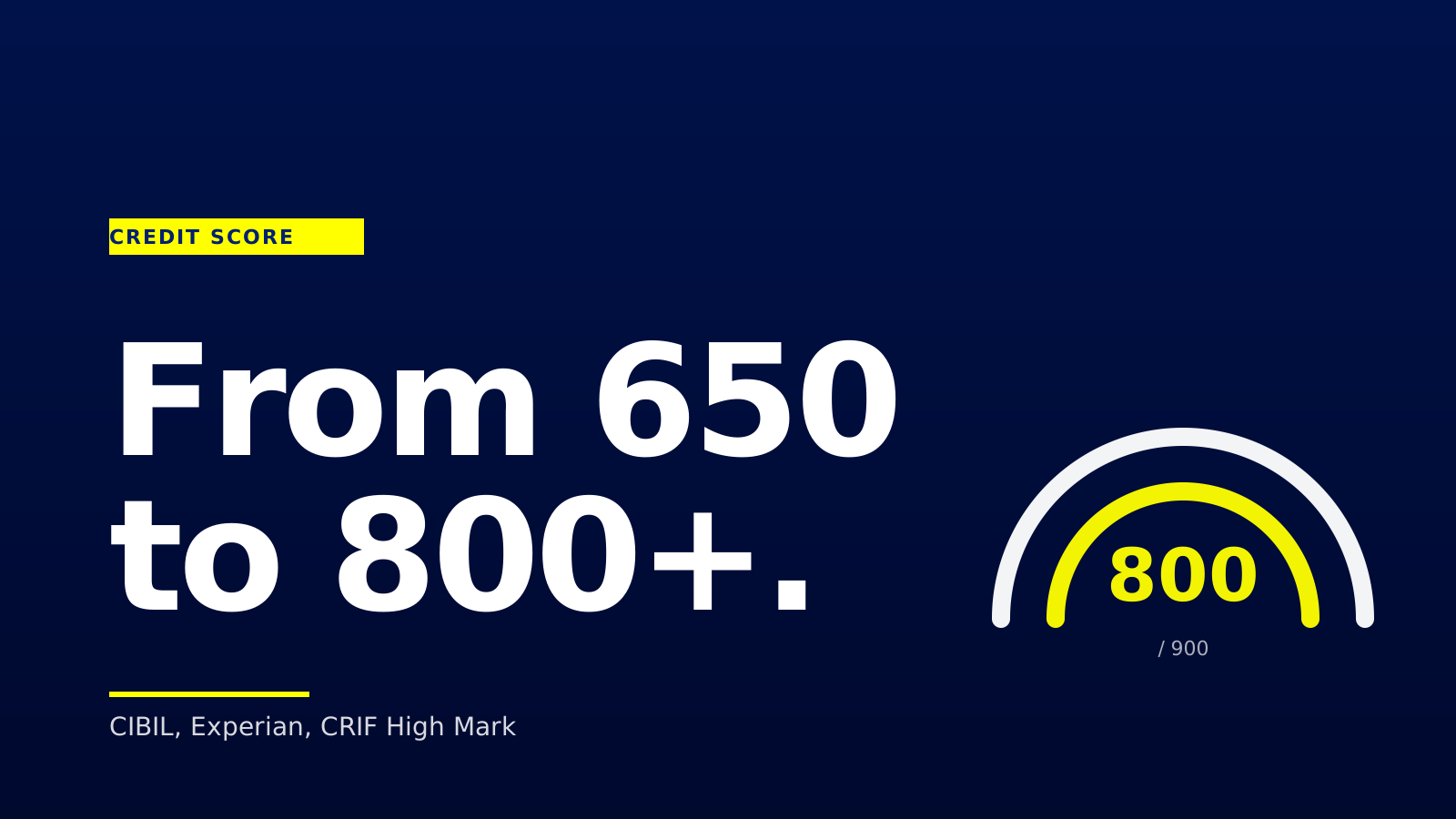
Your CIBIL score is a number, not a verdict. Here's how it's calculated, what moves it, and what doesn't.
You've reached the end.